Chemical Kitchen, an entry level course at Imperial College London, teaches students good laboratory practice through a simple and accessible activity – cooking.
Chemical Kitchen, an entry level course at Imperial College London, is the innovative STEM course that 2020 absolutely requires. In it, students learn good laboratory practice through a simple and accessible activity – cooking.
Designed by Jakub Radzikowski and Luke Delmas, Chemical Kitchen trains students in the practical lab skills they’ll need as they move into upper level and real-world lab work. The response to the course has been tremendous and its delivery far more timely than the designers could’ve ever imagined.
In Chemical Kitchen, Luke and Jakub don’t teach the science of food per se, but rather they use cooking procedures to teach essential lab techniques. The course’s mission is to “teach practical laboratory skills, planning, creativity, safe working, precision, dexterity, making and recording observations, and the application of knowledge.” Cooking is an approachable and downright fun way to do this. It’s also highly accessible despite the global pandemic and is an activity that many have taken up with new passion over lockdown (looking at you, sourdough bakers!).
While completing Chemical Kitchen students make, for example, curd cheese with a protocol that looks very similar to a scientific chemical procedure (i.e measure 100 mL of milk, heat to 85 degrees and so on). Throughout the process students use the same rigor and precision that they would in an industrial cheese factory or food lab.
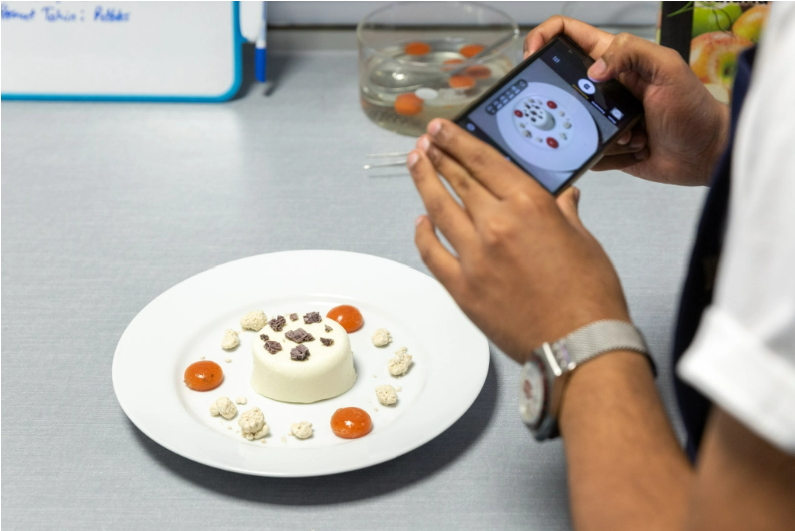
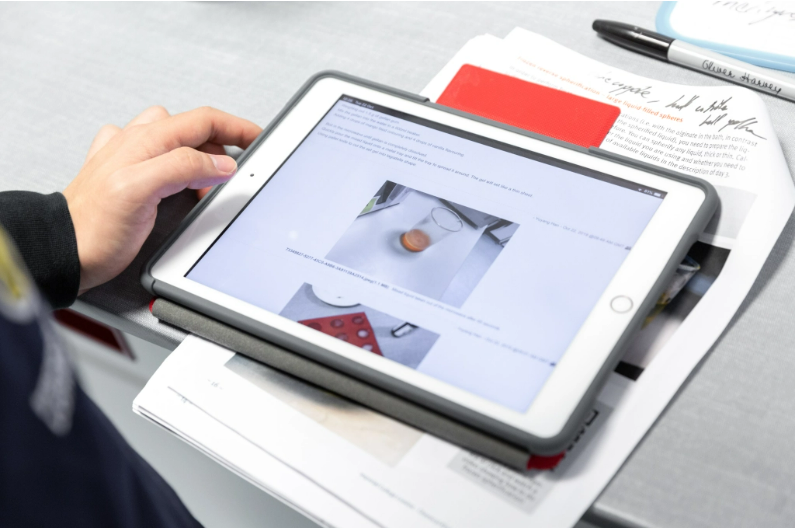
This course serves as a great ice breaker, too. Rather than constantly competing in the classroom, students work and create together which creates a positive and collaborative environment. Students take photos and videos of their work in this course, too. The multimedia aspect adds to Chemical Kitchen’s vibrancy and is supported by the use of LabArchives. Every student keeps their own digital notebook and this has enabled the course to continue despite COVID-19.
“There are major advantages over traditional notebooks. Our students can capture things with iPads or phones and upload quickly,” said Jakub. Students can share work with one another easily and Jakub and Luke can offer real time feedback regardless of student or instructor location. “Students enjoy using digital notebooks,” Luke said, “They are modern tools and students expect that.” The pair don’t miss dealing with messy student notebooks or missing pages and even host their lab manual via LabArchives.
Students photograph their work and add the content to their LabArchives digital notebooks (below).
Despite COVID-19, Chemical Kitchen is still bringing students together with a blended approach. Lectures have been moved online but practical sessions can still occur on site in a socially distant manner. Despite that, Chemical Kitchen is going fully remote. Jakub and Luke have sent lab kits to students who are working from home. “Having a digital notebook is crucial especially now to monitor feedback and progress and to check in at a distance,” Luke said.
Luke and Jakub have found that students aren’t afraid to waste paper when working digitally and are more likely to capture metadata when they can quickly record and edit things online. “Our students are fresh out of high school. We have to help them think about what to record,” Luke said, “When we start out the lab reports are fill in the blank but by the end of the course everything, even formatting, is up to the student.”
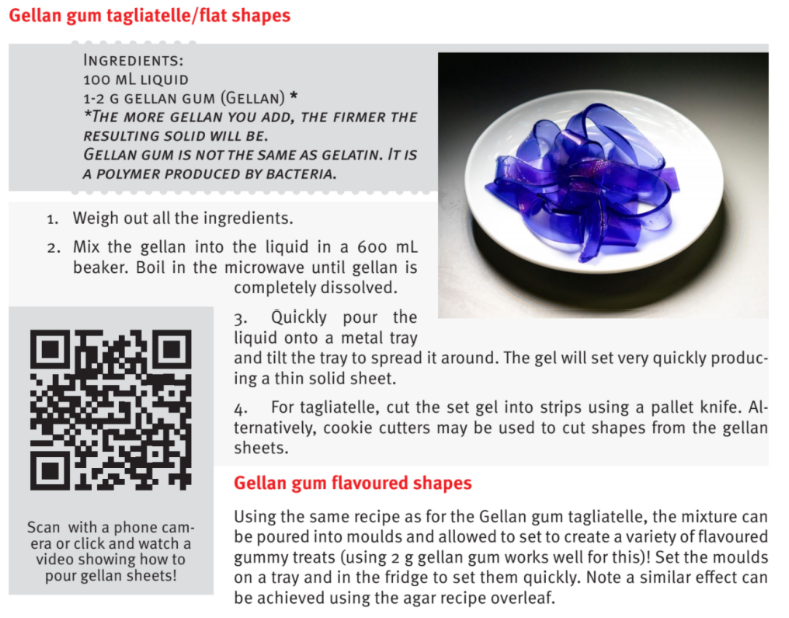
A page from Chemical Kitchen’s lab manual which is hosted on LabArchives.
The course includes three to four major experiments which include making curd cheese, recrystallizing table salt, designing a method with which to poach an egg in a water bath and exploring different modernist recipes to create a final dish in a team of three. With 180 students in the course each term, Luke and Jakub say no two final dishes have ever looked the same.
Across research and technical teams, one instinct keeps winning: move fast and stay flexible,. Call it vibecoding. It feels efficient, modern, and cheaper, because there are no new systems to stand up and no hours lost to recordkeeping. But that feeling is an illusion. You cannot vibe your way to compliance, and the moment your work has to be shared, reproduced, or audited, the shortcut reveals itself for what it always was: a deferred expense with higher interest.
Tracking individual aliquots across experiments, team members, and storage locations can quickly become difficult. New Aliquot Management in LabArchives Inventory makes it easier to create aliquots in bulk, monitor each one individually, and connect samples directly to experimental data, all while maintaining complete traceability.
Every week, your shared research resources run nonstop. Instruments hum, grants fund the work, faculty publish. The engine is running. But could you produce, today, a single structured report showing which resources drove which grants and papers over the past three years? In most institutions, not without weeks of manual work, and likely with gaps. That is not a storage problem. It is an attribution problem, and it is quietly becoming a funding risk.
Most SaaS providers treat vulnerability management as a periodic compliance exercise. FedRAMP® does not. Achieving FedRAMP authorization required LabArchives to build a continuous, deeply scrutinized vulnerability management program covering everything from code and infrastructure to containers, databases, and penetration testing. The result is a stronger security posture that benefits not only government agencies, but every LabArchives customer.

 Record, organize, search and share your scientific data
 Streamline organizing, tracking and ordering lab inventory
 Manage and schedule lab equipment and resources
 Secure, compliant, government-approved solution